KNOWLEDGE LIBRARY
providing insight into the Akita Inu breed
AKITA INU STANDARD
Akita Inu Hozonkai (AKIHO) introduced its first official Akita Inu Hyoujun (Breed Standard) in 1938. The current version, issued in 2005, is the fourth revision and reflects several refinements, including a reduction in recognized coat colours from six to four. The earlier list—white, black, red, silver-tipped, brindle, and pinto—was consolidated to establish a more consistent definition of the breed.
The English translation below—originally written for the book AKIHO Honbuten: Definitive Edition—has been produced with strict adherence to the original Japanese text. No words have been added or omitted, ensuring that descriptions are conveyed as faithfully as possible. For example, the Japanese term sententeki is translated as “by birth.” While the literal meaning has been preserved, context is essential: Akita Inu puppies are not born with erect ears; this characteristic generally appears between two and five months of age.
Where appropriate, Japanese terminology has been retained to express nuances specific to the breed. This approach maintains the precision of the standard while providing readers with a more accurate and authentic understanding of the Akita Inu as defined by AKIHO.
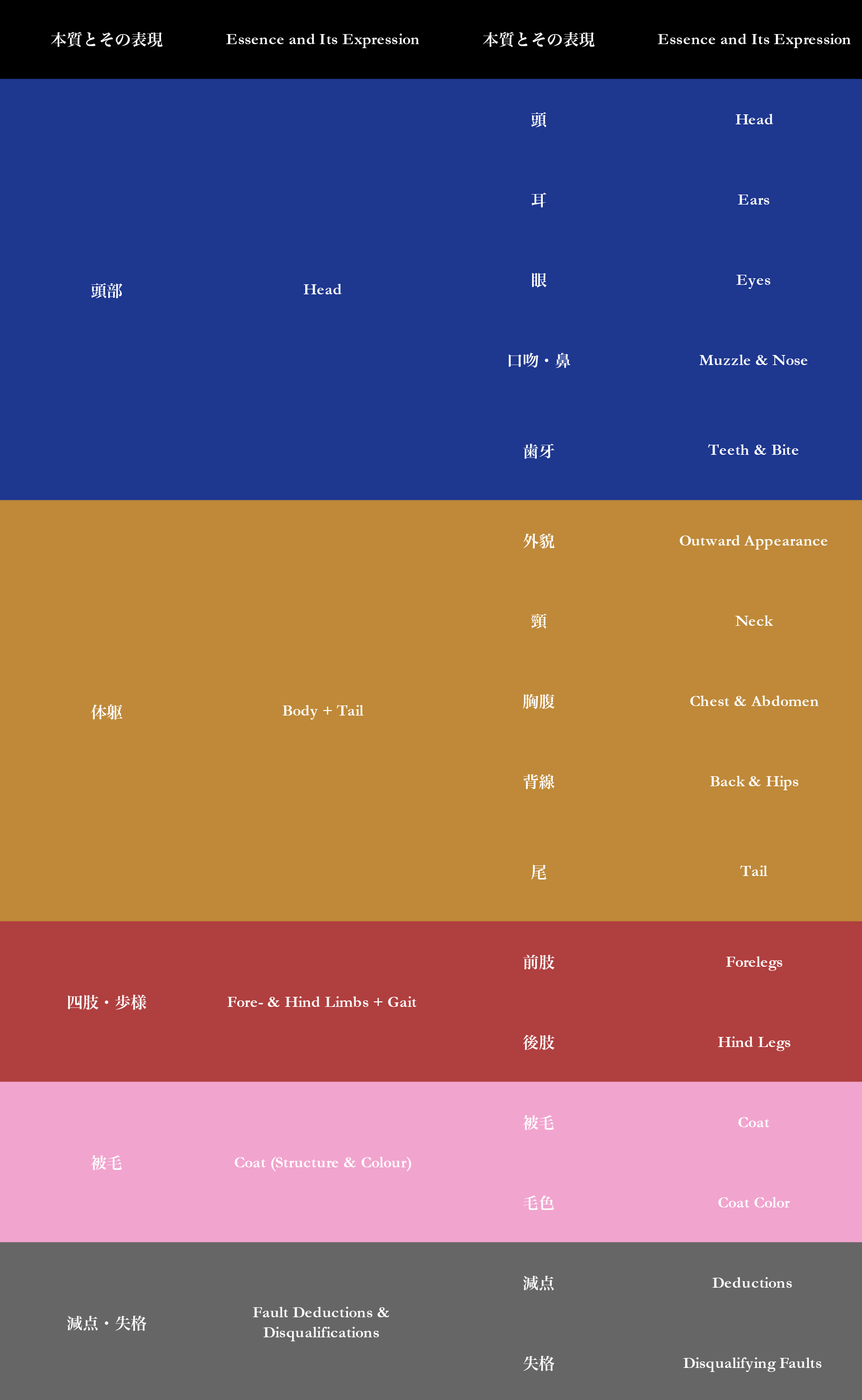
To further assist readers in navigating the structure of AKIHO’s Breed Standard, the translation below also employs a colour-coded format. Each colour corresponds to a principal judging category—such as Essence and Its Expression, Head, Body and Tail, and others. This system follows the framework traditionally used in Japanese kynological evaluation and aims to present the interrelation of these categories with respect for AKIHO’s judging methodology.
秋田犬
秋田犬の真の本質を求めて
秋田犬保存会犬種標準 英訳と解説
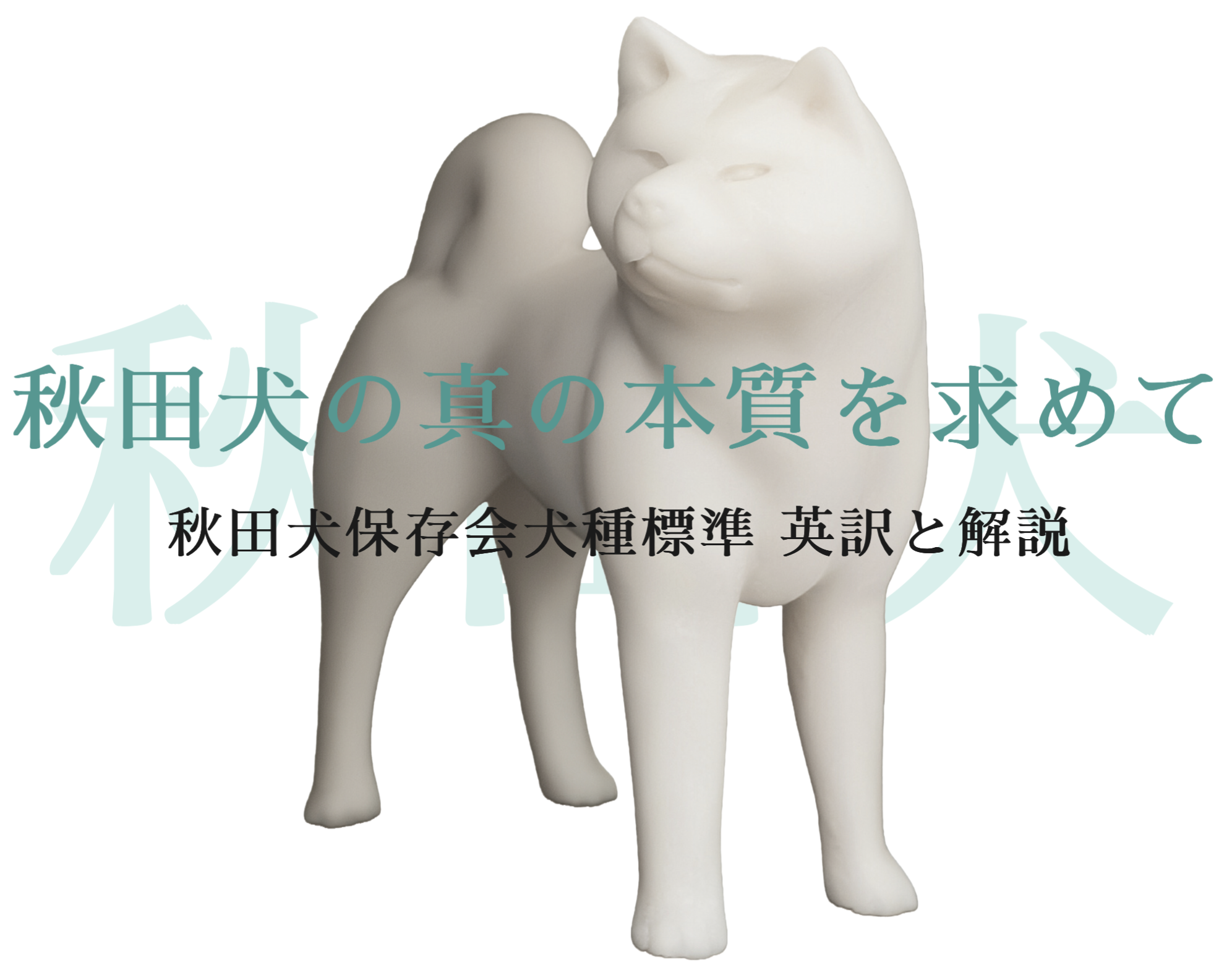
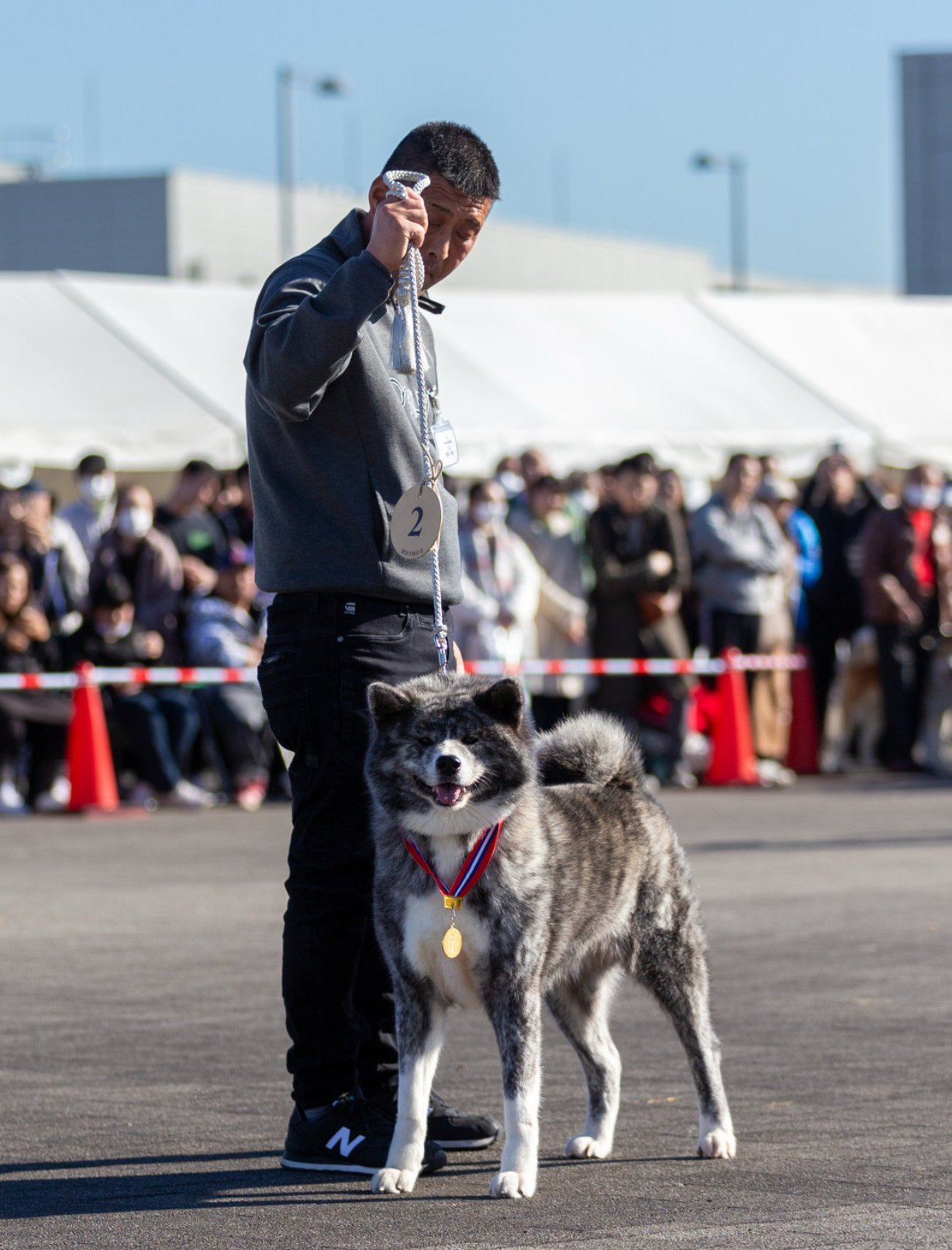
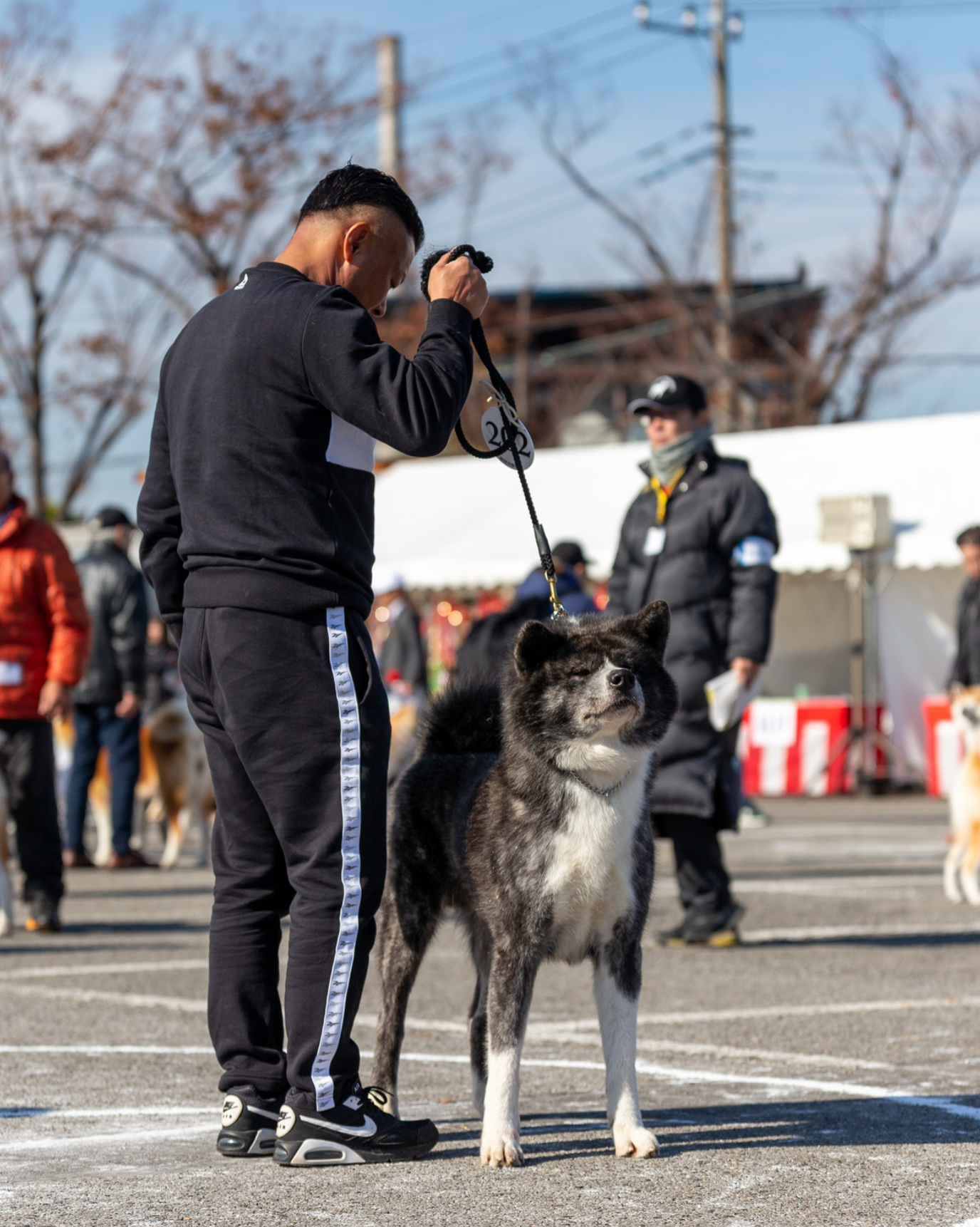
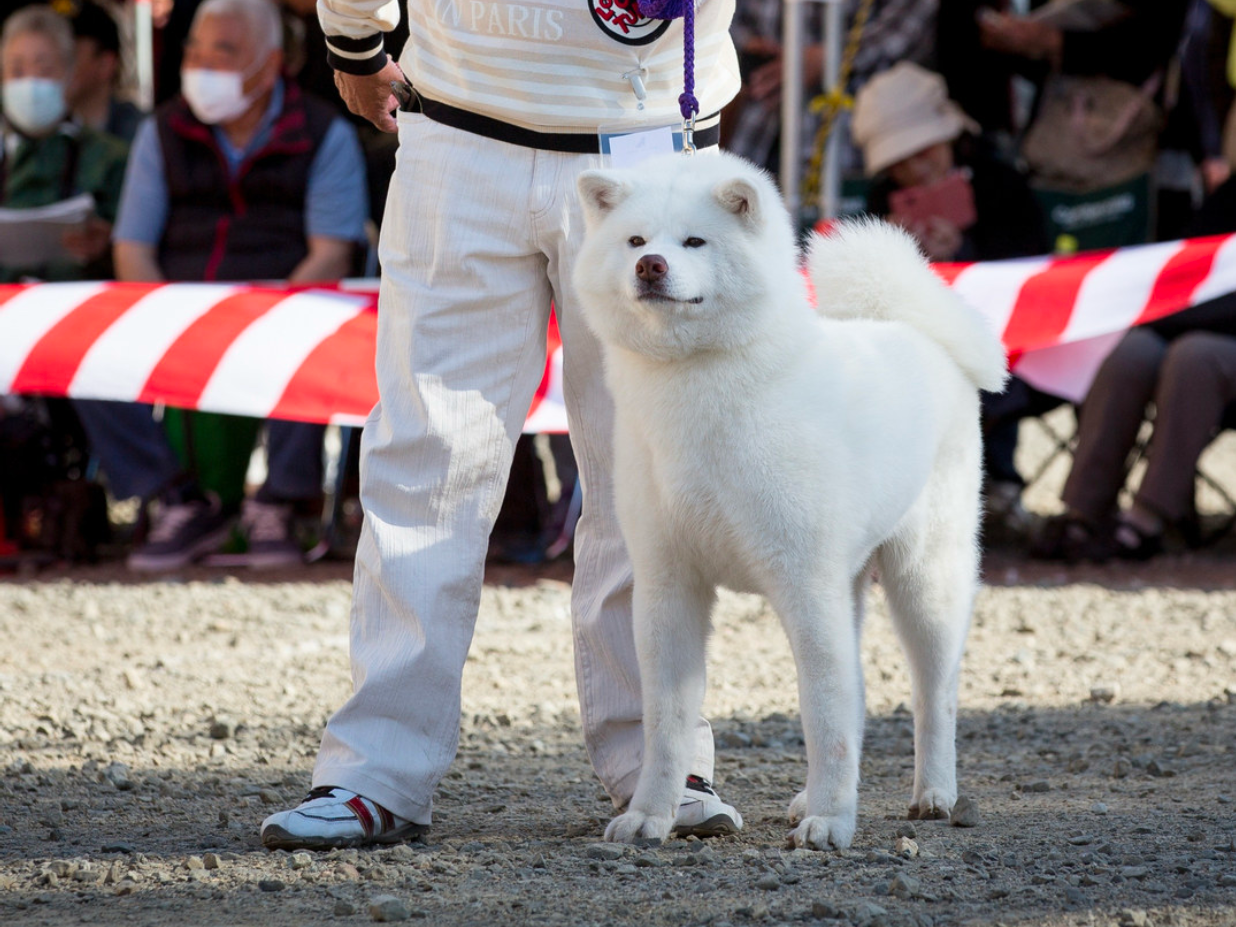
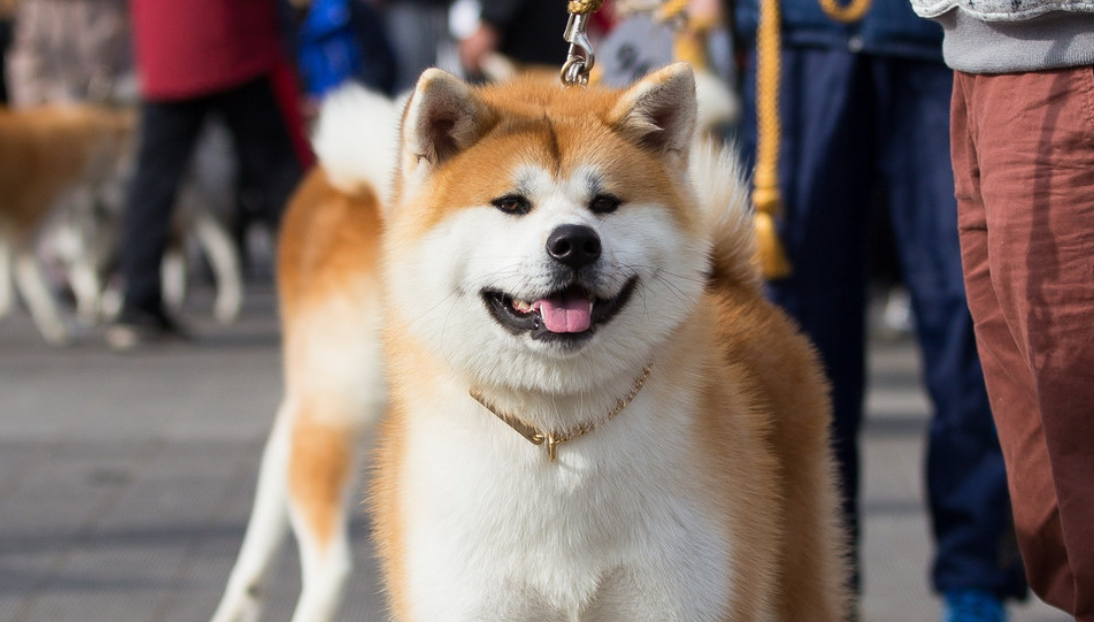
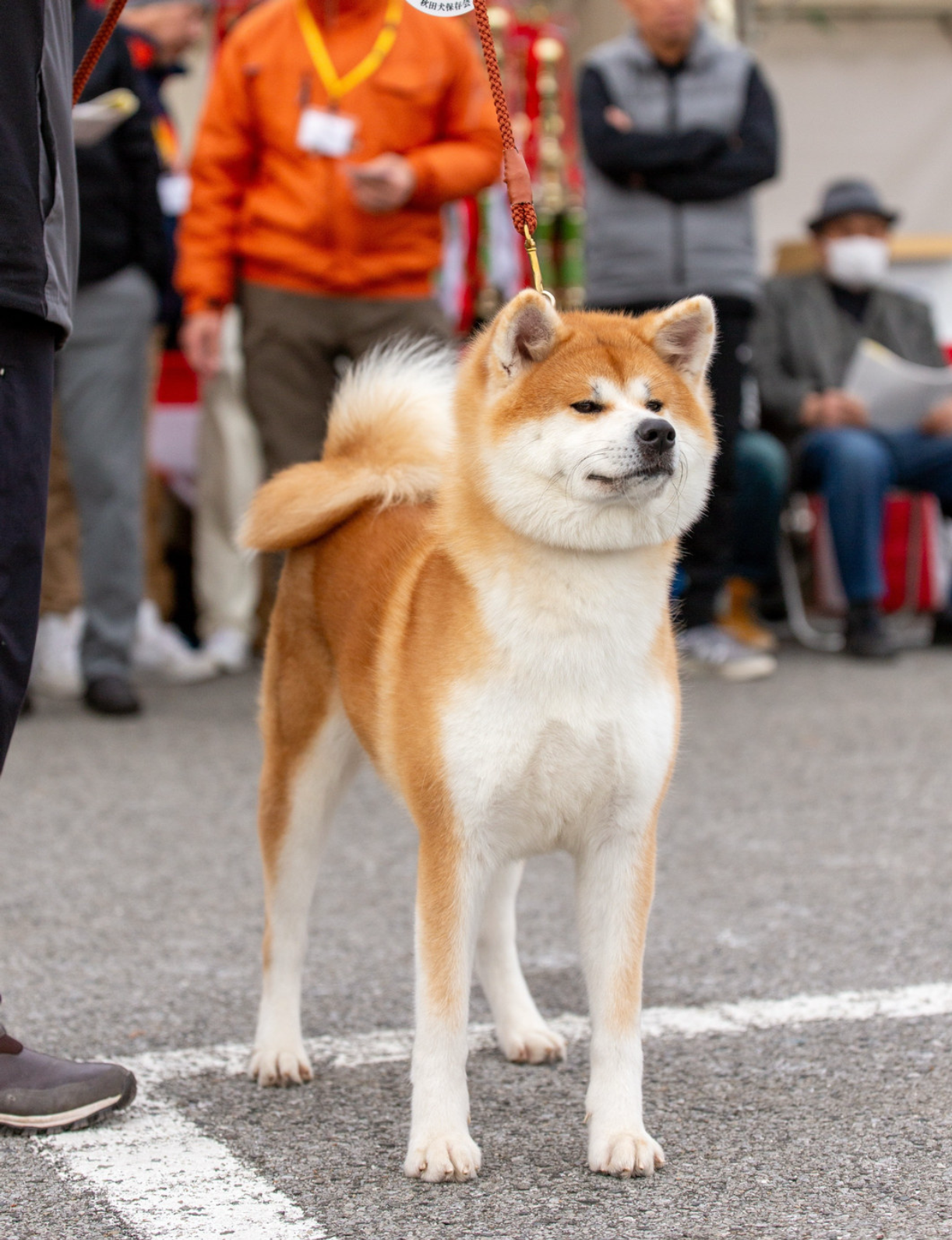
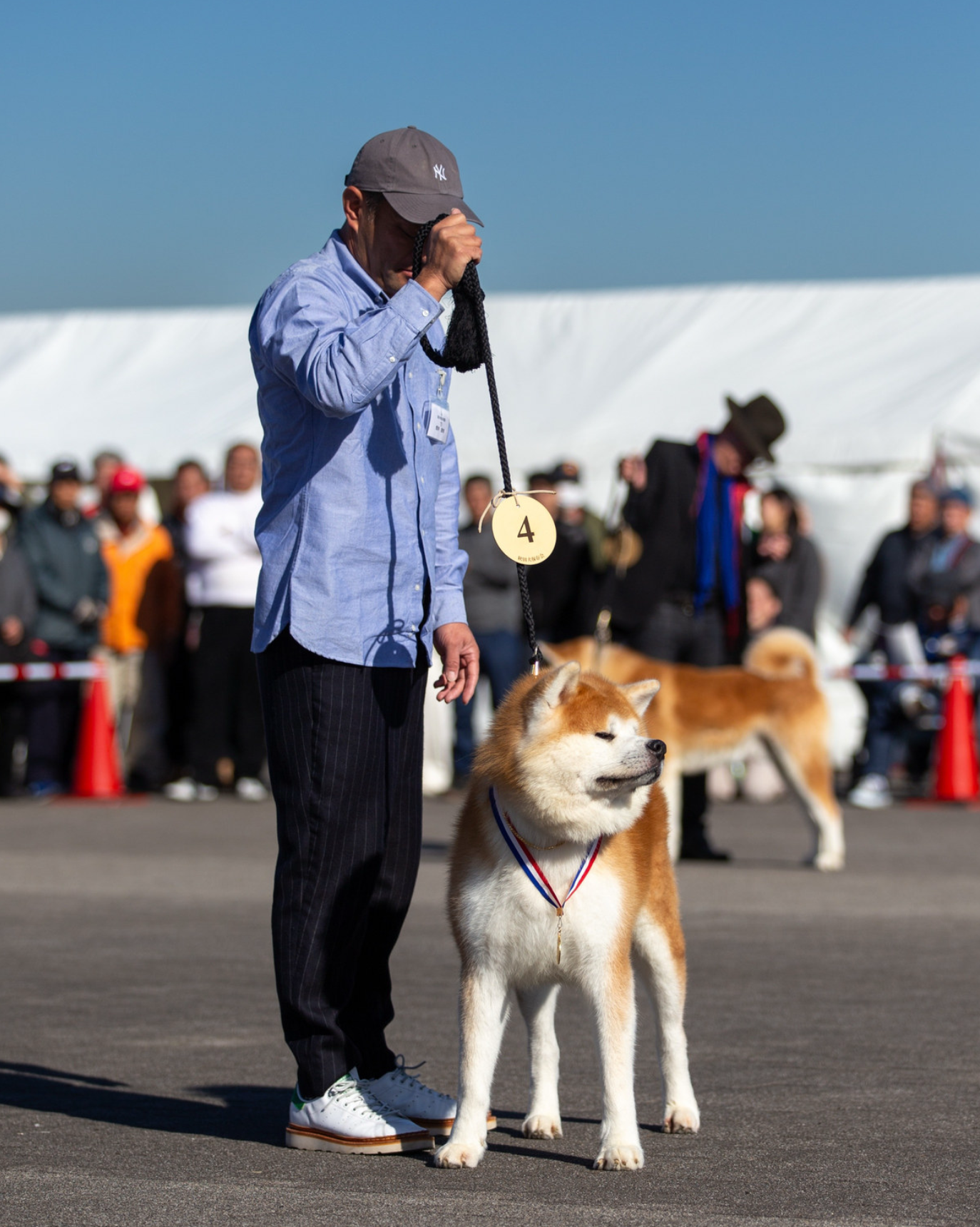
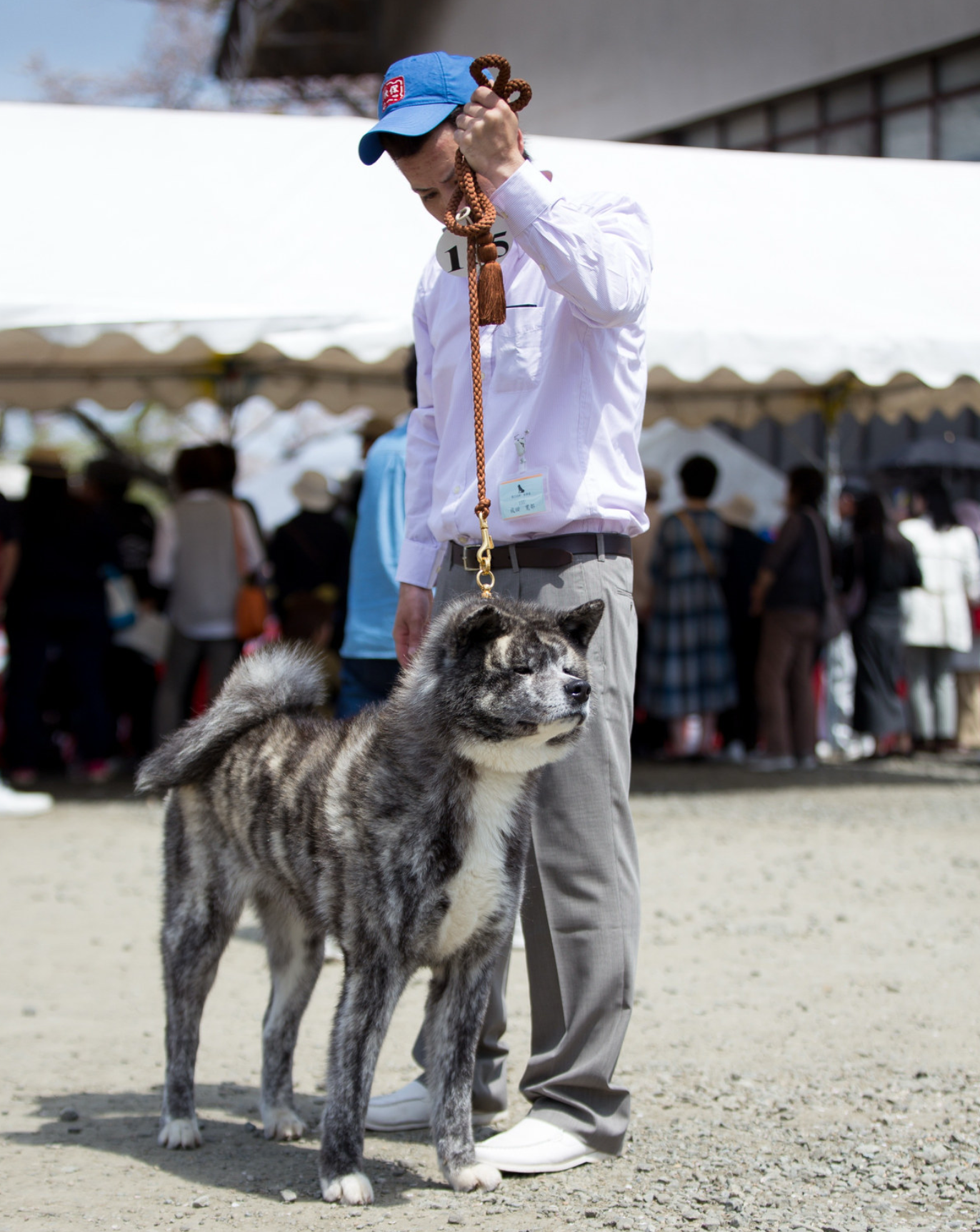
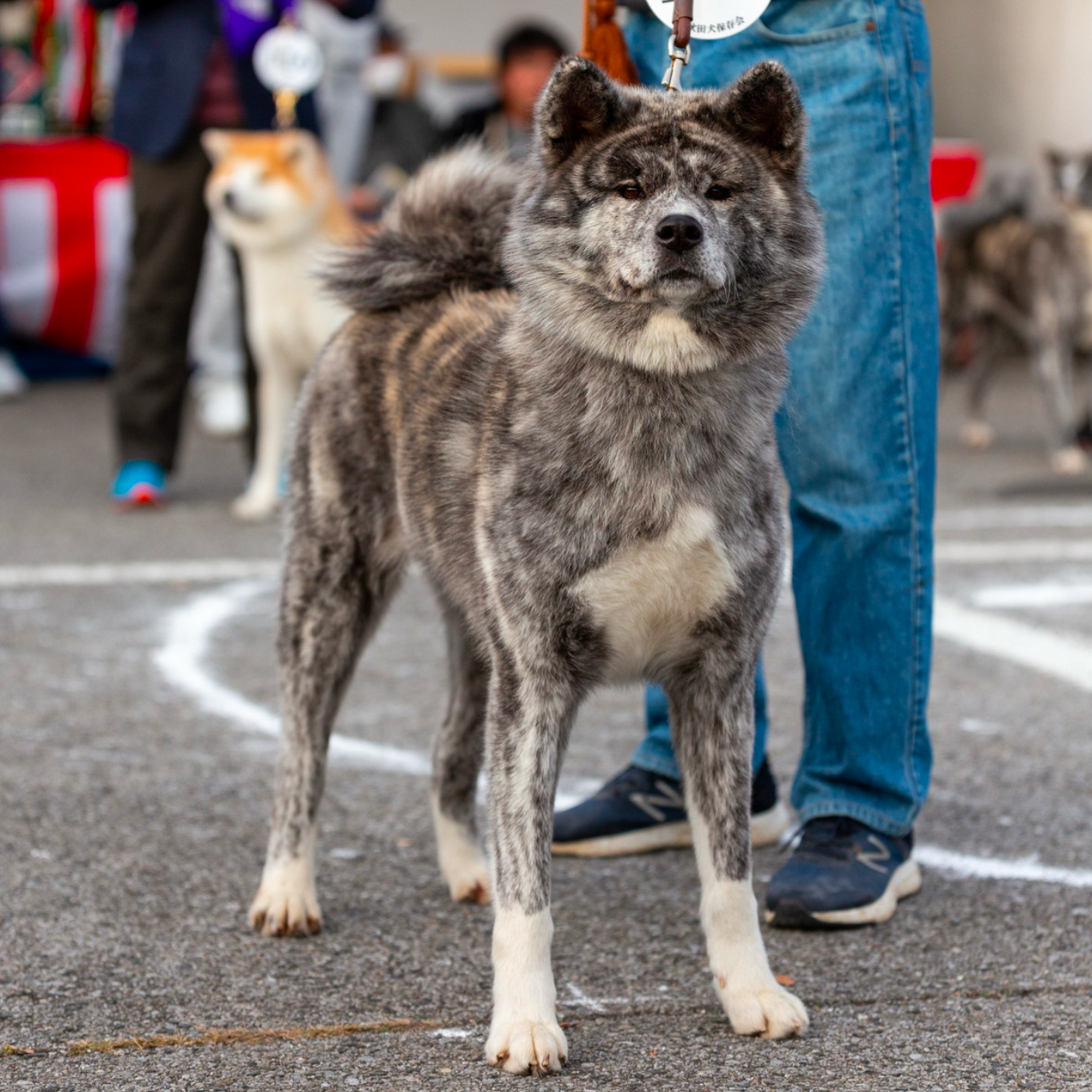
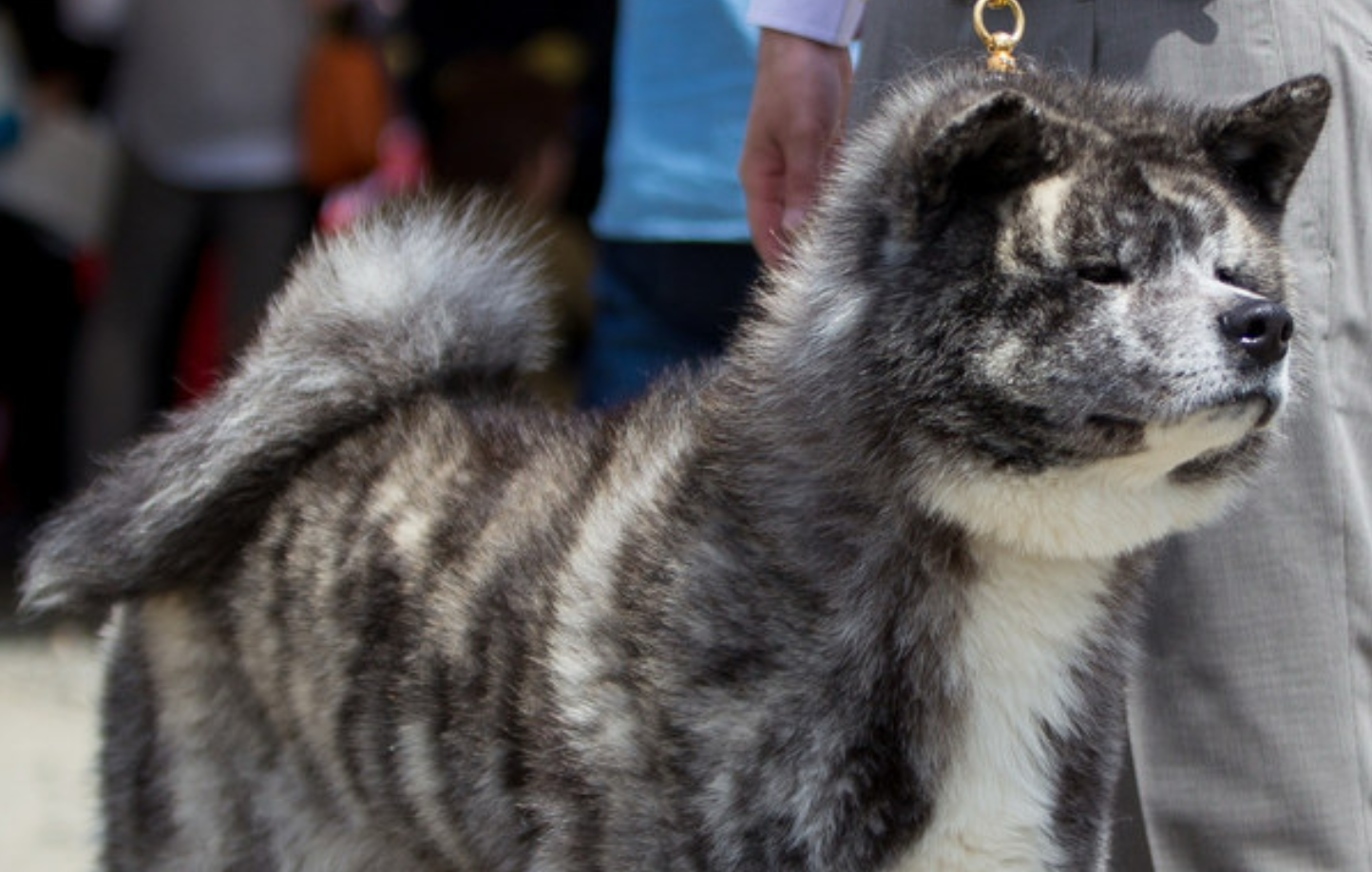
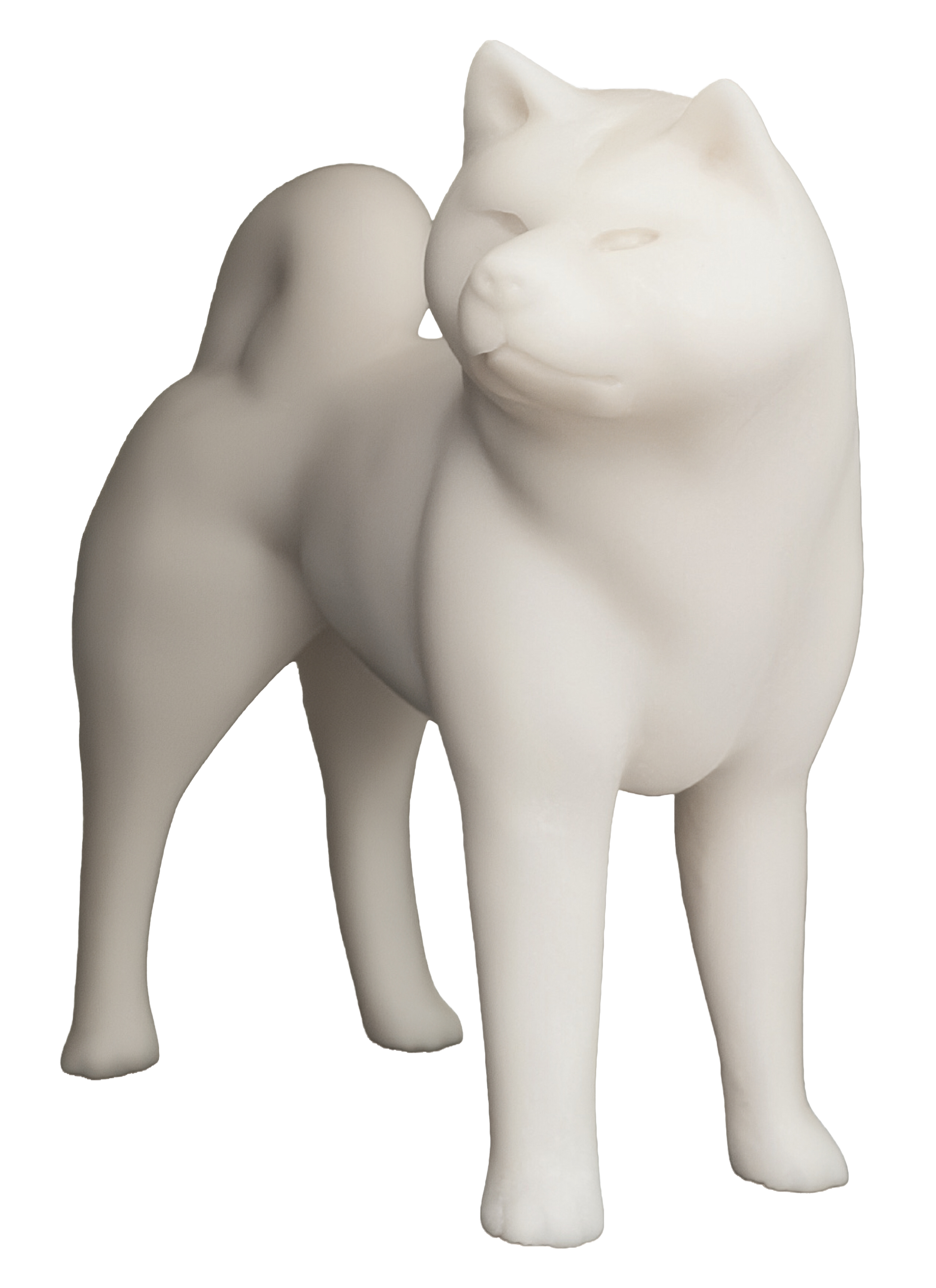
The Akita Inu's honrai no seishitsu (natural characteristics) are chinhaku (calm), gouki (fortitude), igen (dignified), while rich in seikan isei (toughness and boldness). It has a sunao (obedient) and chuujitsu (faithful) character, while being kazarikenonai (unaffected) and having a feeling of hin'i (dignity) and soboku (simplicity, artlessness). With binkan (sensitive senses) such as sight, hearing, and smell, its behaviour is ouyou (collected) yet binshou (alert, nimble).
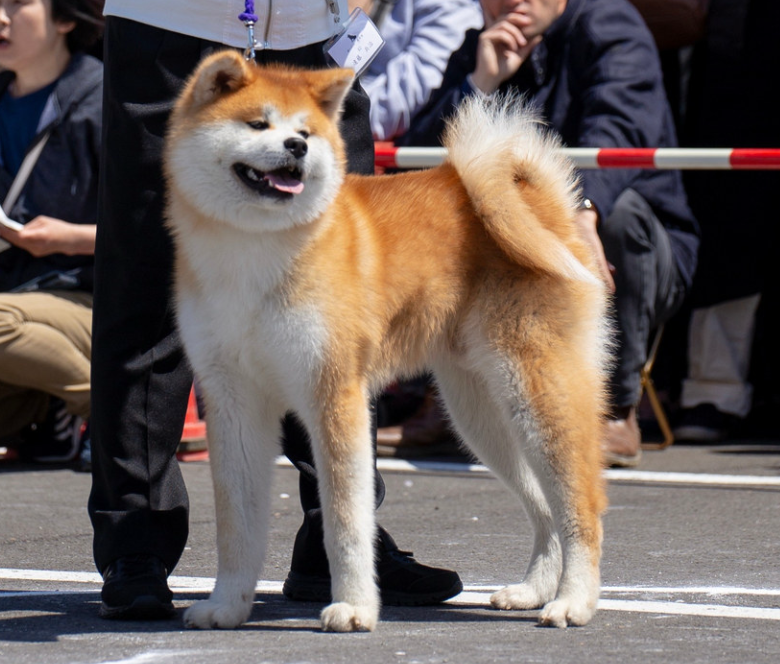
In terms of gaikan (appearance), each part of the body is accurately constructed and balanced, the skeleton is sturdy and steady, the tissues such as muscles, tendons, and ligaments are well-developed, and the skin is tight without sagging. Osu (males) have masculine looks, and mesu (females) have a feminine appearance. The ratio of taikou (body height) to taichou (body length) is 100:110, and females are slightly longer than males, with the standard body height being 66.7 cm (2 shaku 2 sun) for males and 60.6 cm (2 shaku) for females.
The allowable range is up to 3.03 cm (1 sun) above and below. The ratio of body height to chest depth is approximately 2:1.
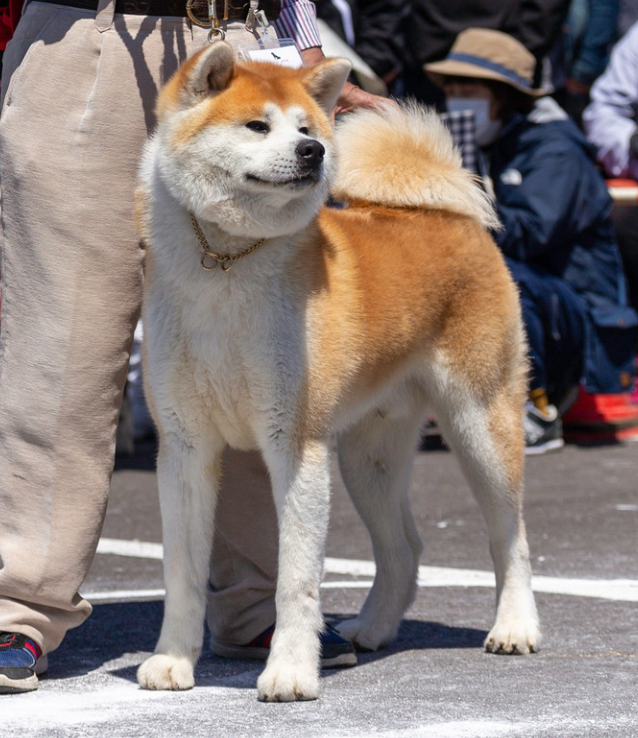
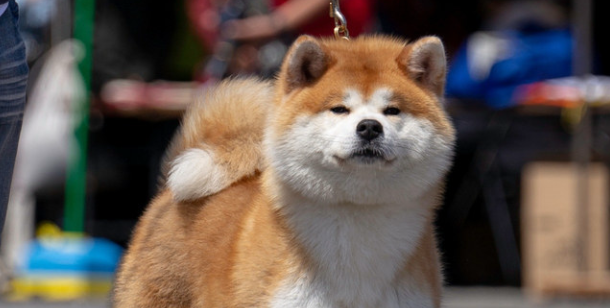

The skull is large and well-developed, with a somewhat flat top; the forehead is wide and unwrinkled; it has a clear tatemizo (furrow) and a moderate ochikomi (stop); the cheeks are full and well-developed.
The neck is thick, large and strong, and rises at an appropriate angle, the skin is well-tight.


Their shape is in harmony with the head, with a thick, slightly rounded tip and a triangular shape, maintaining a moderate forward inclination. Both the inner and outer ear lines stand straight and strong, and the distance between the ears is appropriate spaced.
Their shape is slightly triangular while deeply set, the outer corner is slightly raised, the color of the eyes is dark brown, and the eyes are appropriately spaced.


The bridge of the nose is straight and full, the base is thick and tapers without a point, the nasal speculum is tight, and the corners of the lips and mouth are well-defined.
The teeth are strong, and the bite is precise (scissor bite).

The chest is deep, the ribs are well-defined, the forechest is well-developed, and the abdomen is moderately toned (tucked up).
The backline (topline) is straight, and the hips are strong.
The shoulder and upper arm are well-developed with a moderate angulation. The elbows are strong and accurate, the forelegs are straight, thick and strong. The pasterns are slightly slanted, and the paws are round, large, thick and have a tight grip.
The hind legs are well-developed, strong and powerful, the hisetsu (hock) has an appropriate angulation, has flexibility and agility. The paws are thick with a tight grip.

The tail is thick and strongly curled. In length it approximately reaches the hock, and can be wound left-curled, right-curled, taikomaki (drum curled a.k.a. centercurled), or nijuumaki (double curled).
The [upper coat] hair is coarse and straight, with dense downy hair on the underside. At kikoubu (withers) and rump the coat is somewhat longer. The tail hair is the longer than other parts [of the body].

There are four keiro (coat colours):
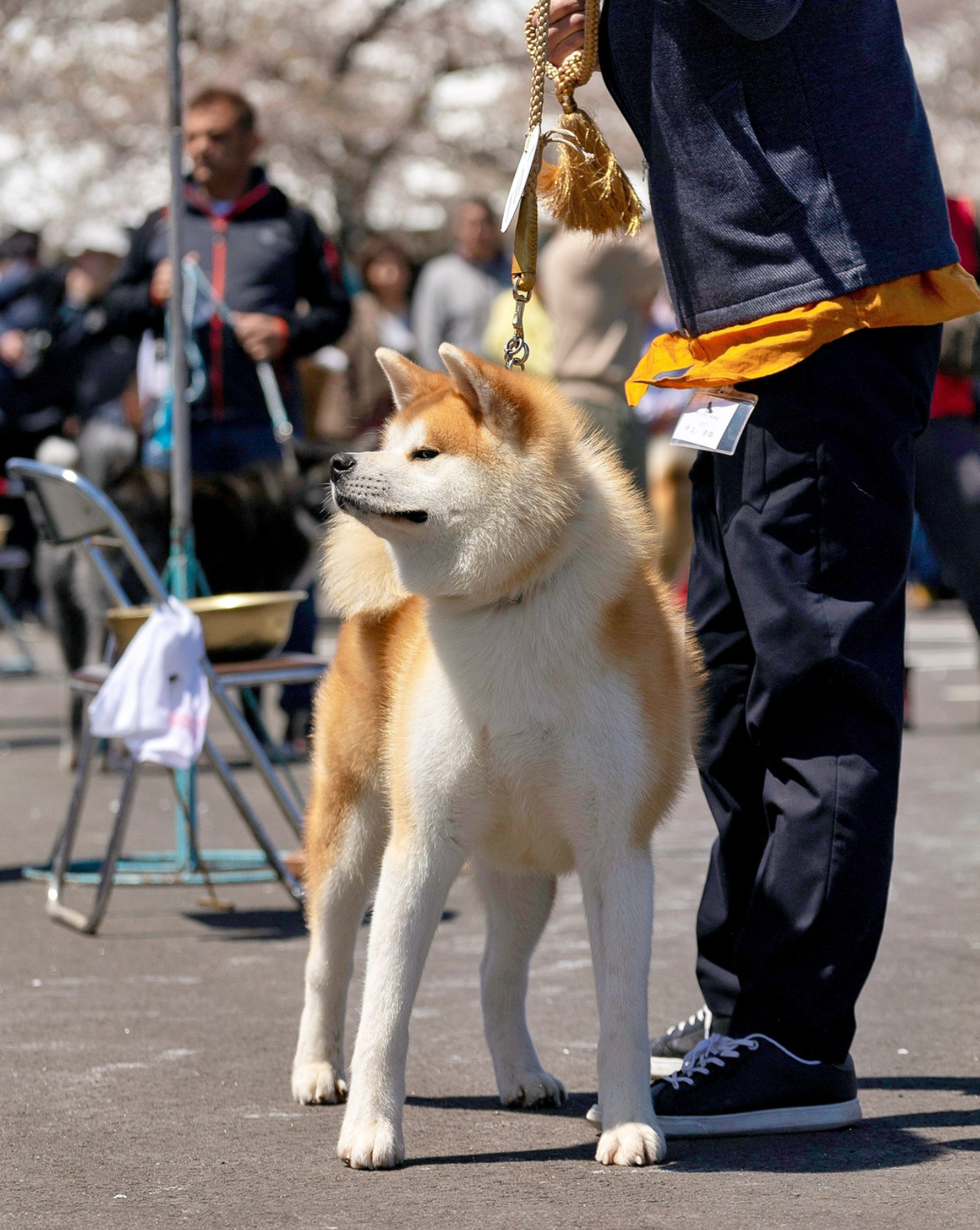
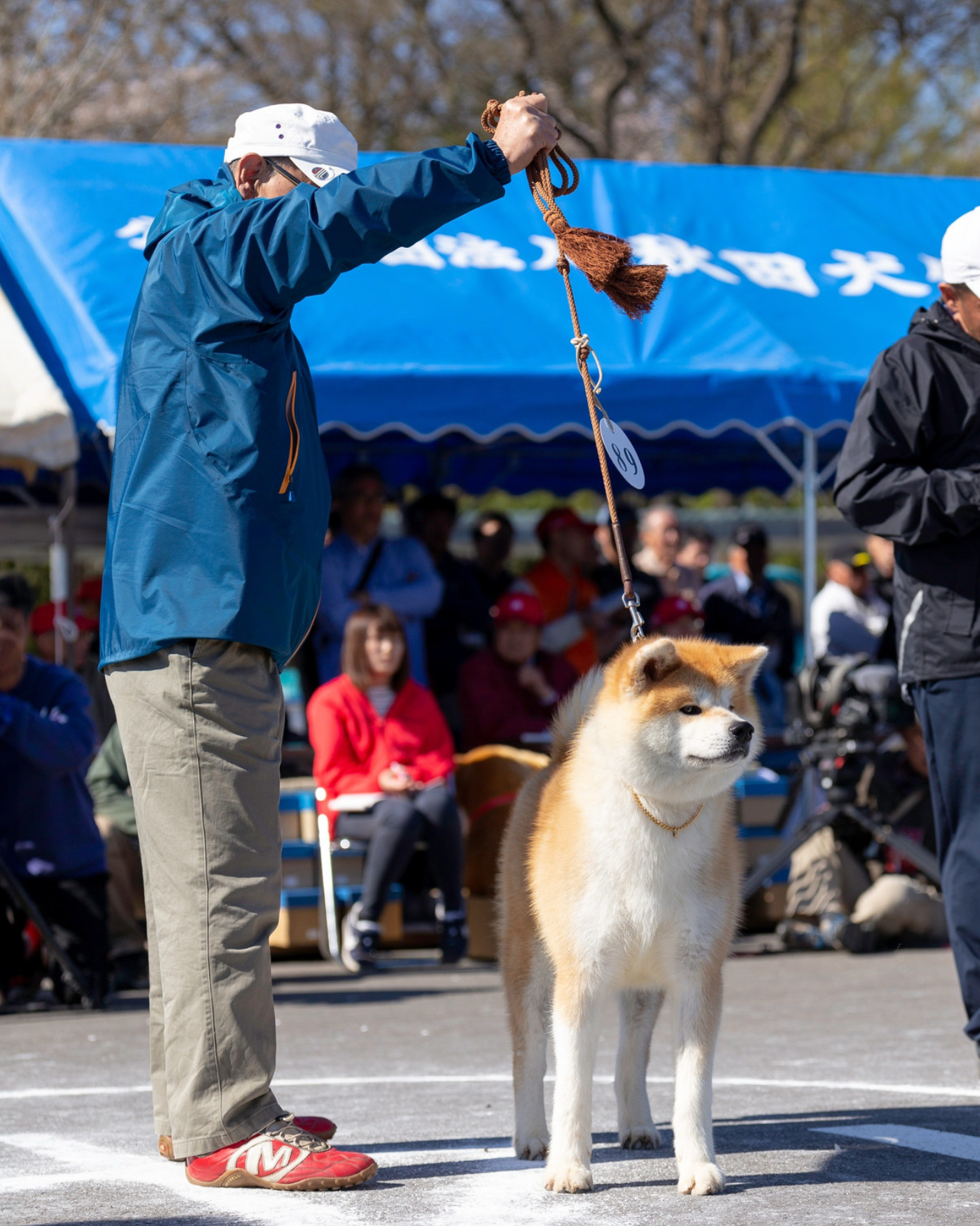
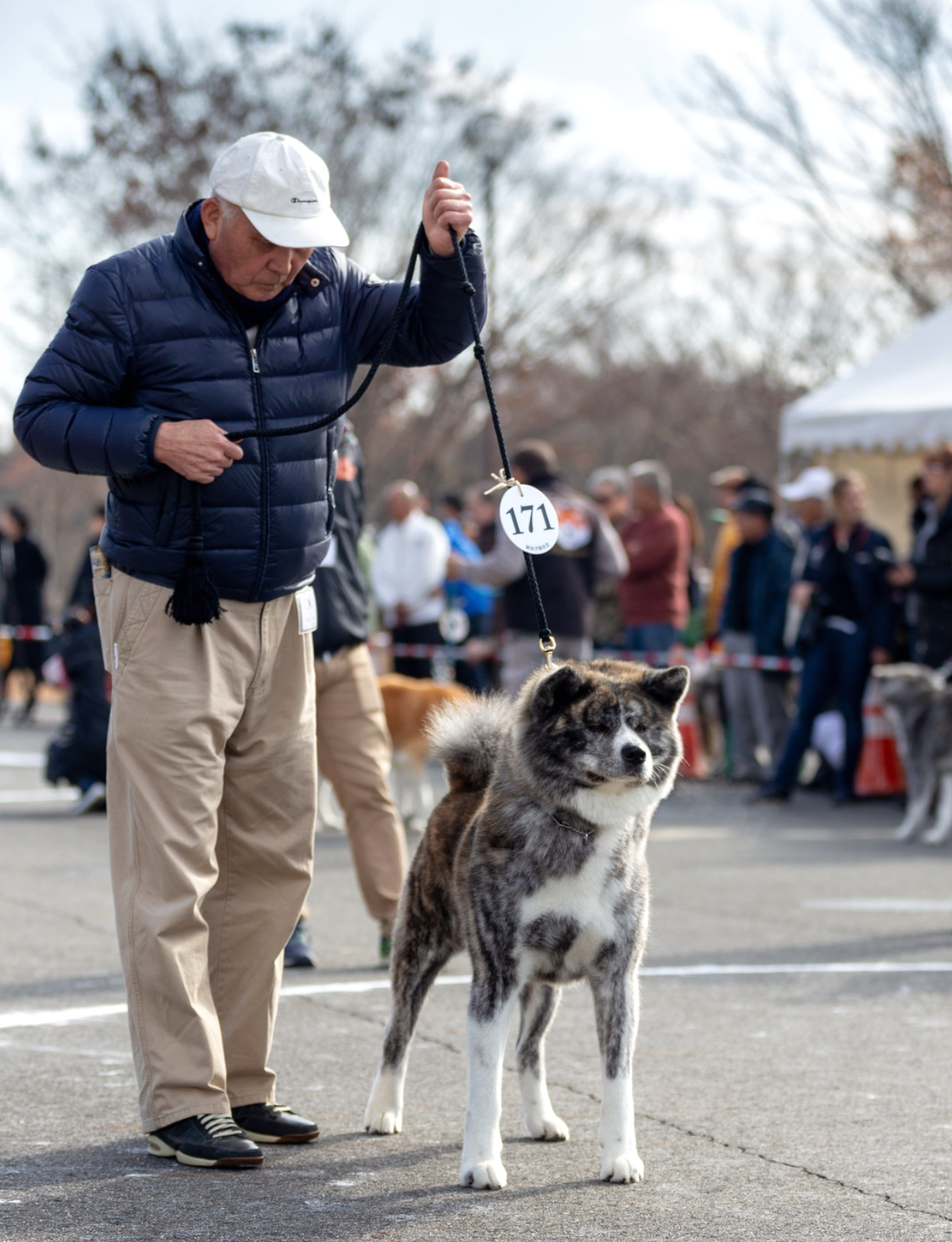
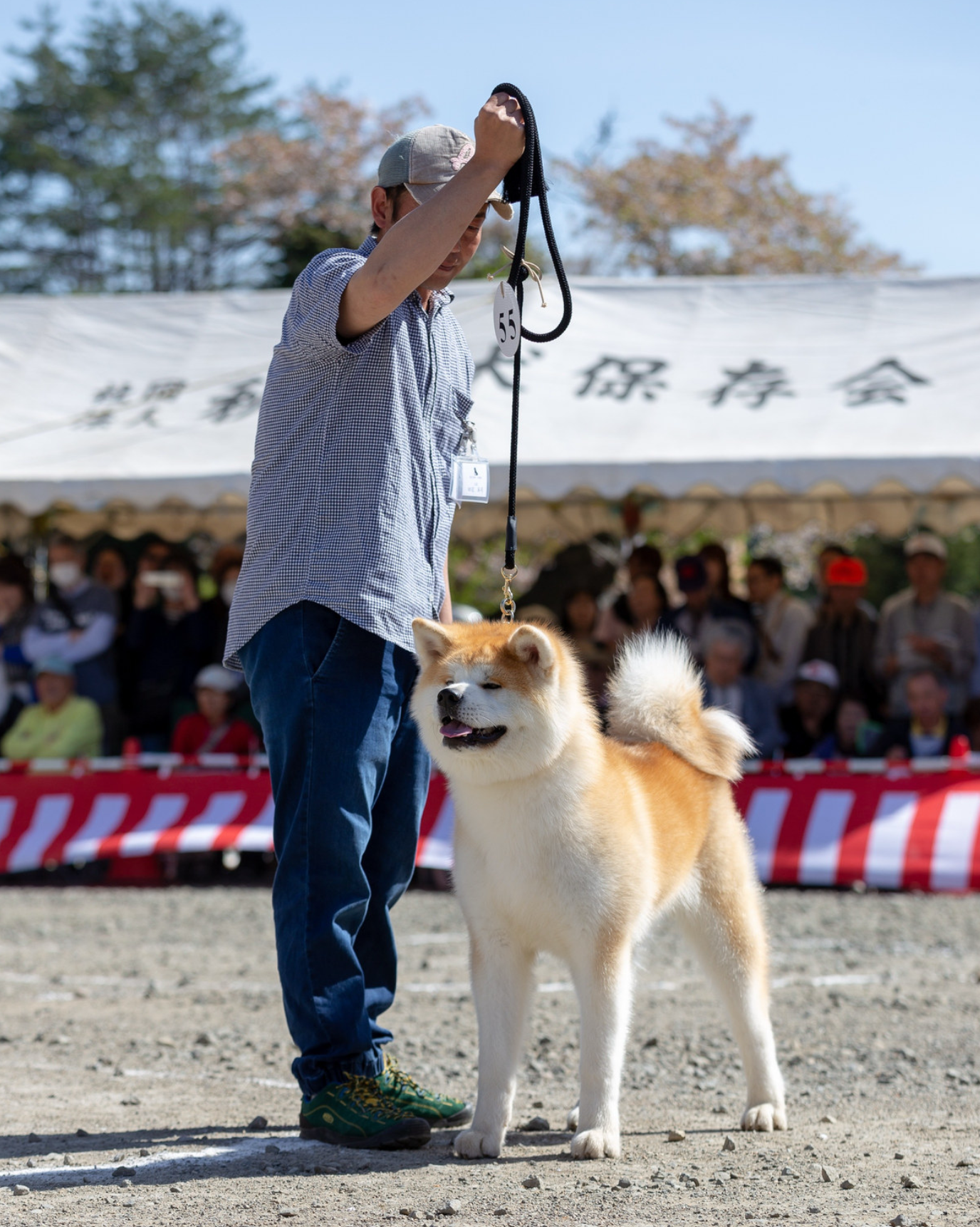
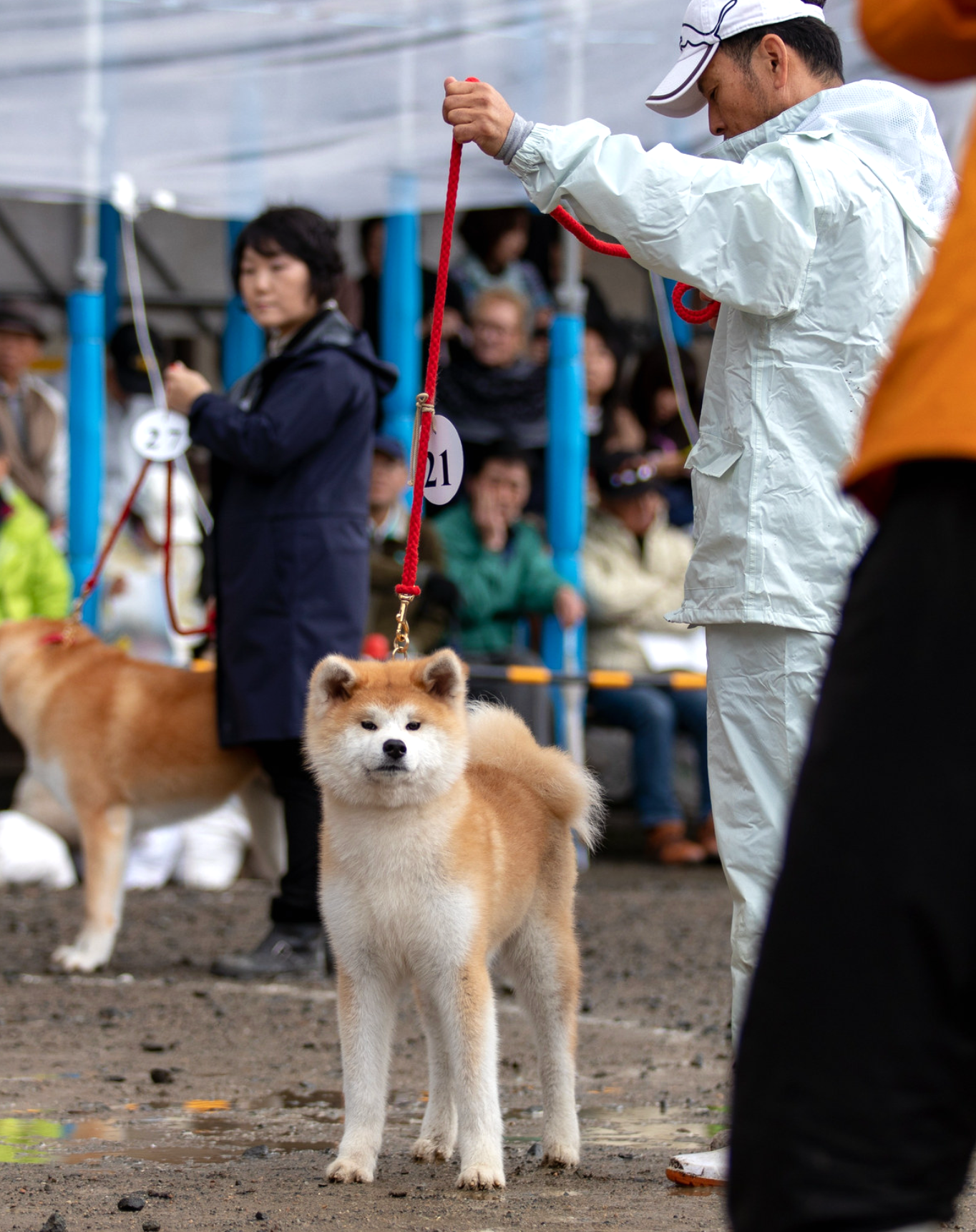
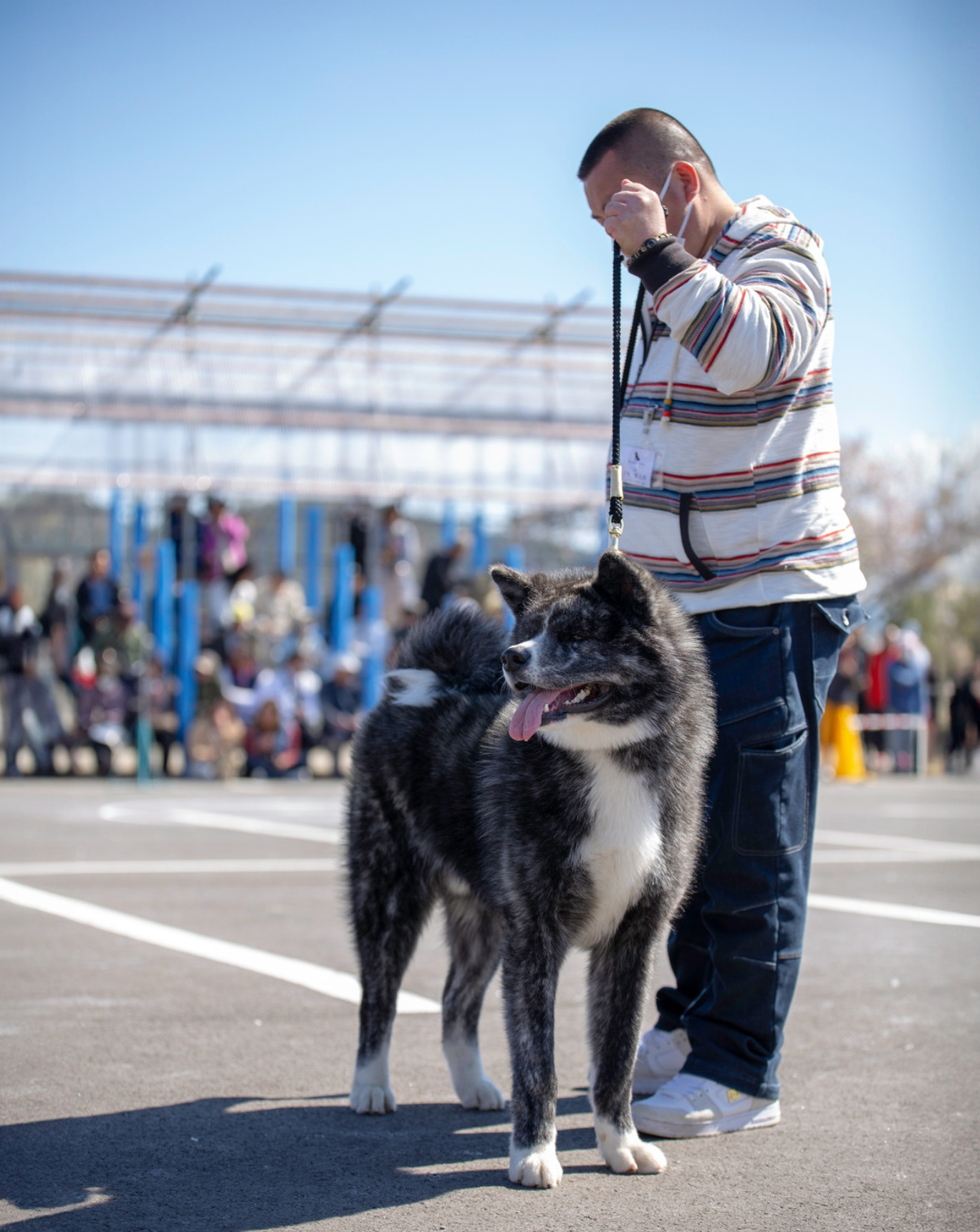
aka (red)
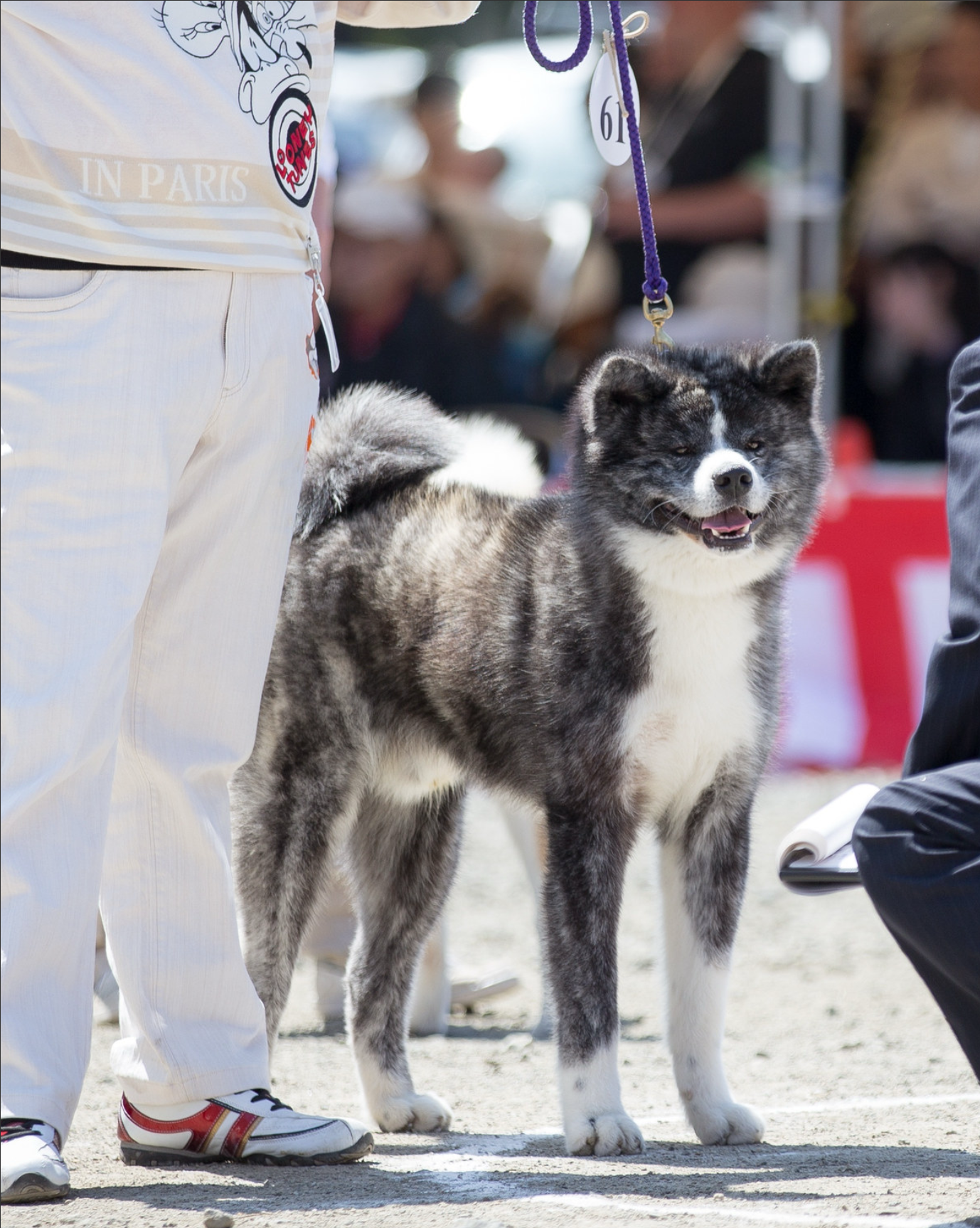
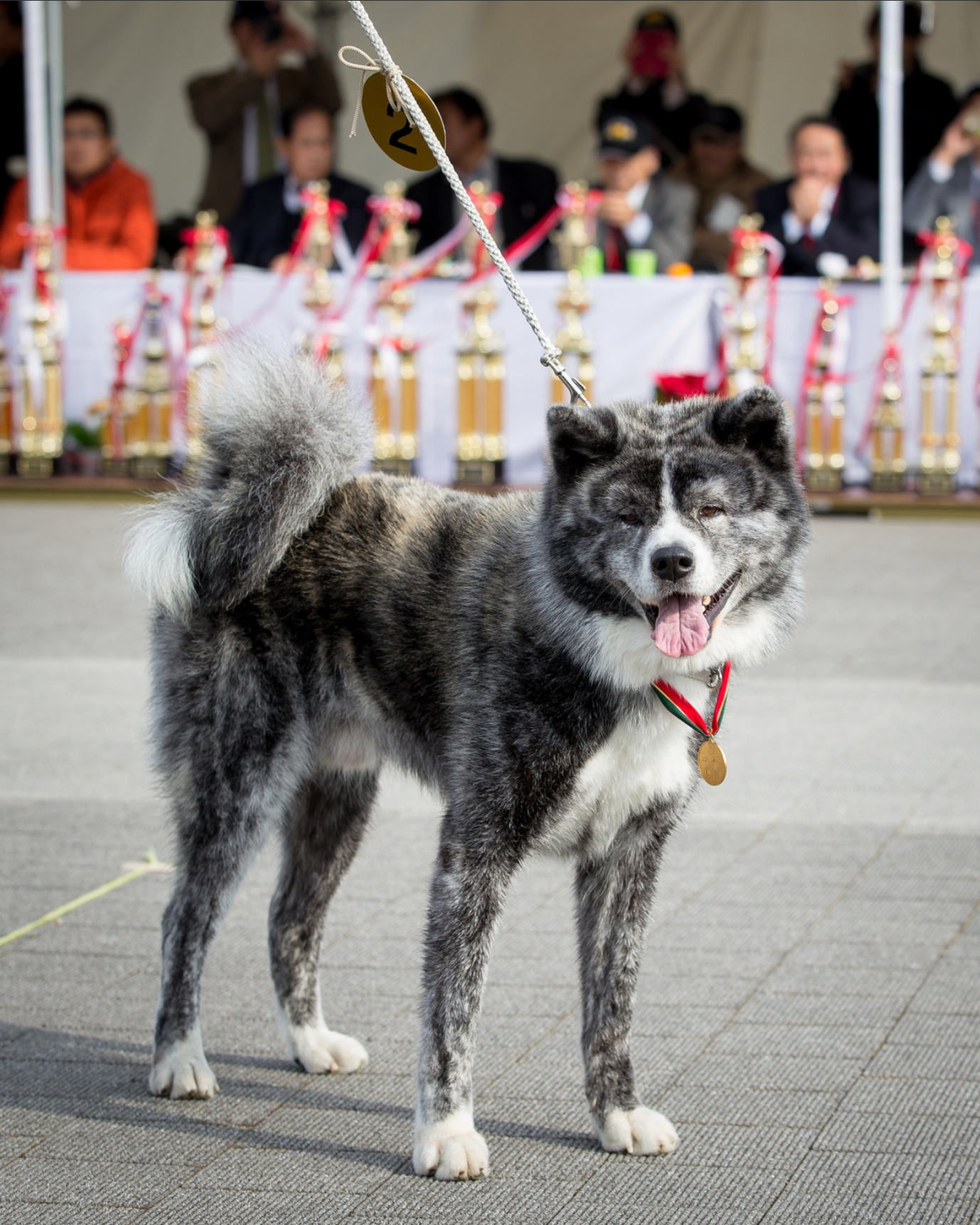
tora (brindle, literally tiger)
shiro (white)
goma (sesame)
1. Acquired injury or considerable dietary deficiency.
2. Color of coat unbecoming to an Akita Inu.
3. Unsuitable color combination of eye-rim and coat.
4. Missing or crooked teeth, undershot and overshot jaws.
5. Hanten (spots) on the tongue.
6. Lacking in courage, being timid, or displaying ferociousness.
7. Others that are lacking the characteristics as an Akita Inu.
1. Ears that are failing to stand by birth.
2. Uncurled tail by birth.
3. Excessively long or short coat.
4. Color of nose not matching the coat. (however, a reddish nose is accepted with a white coat)
5. Those without testicle(s).
6. Others that lack the characteristics of the Akita Inu.